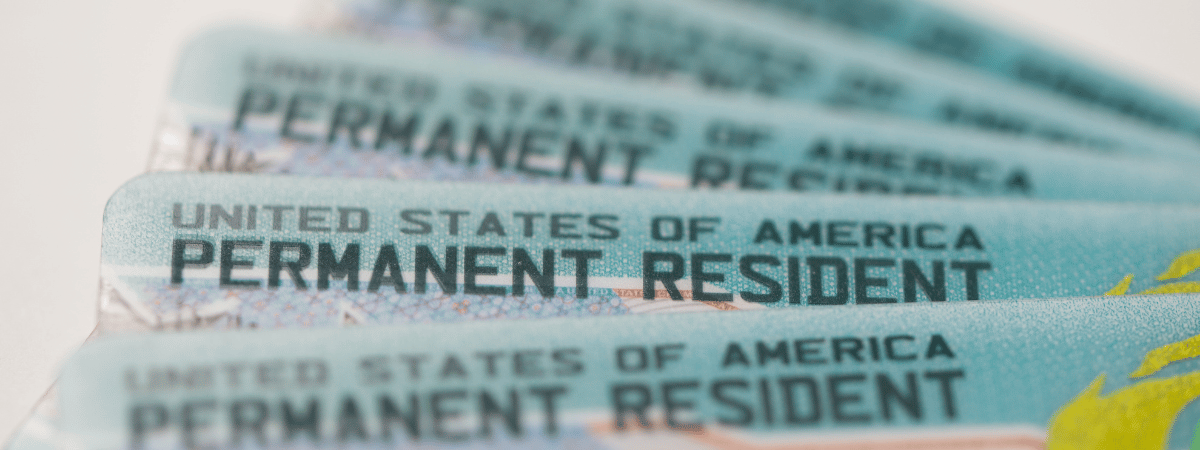
It is one of the most common questions that conditional residents ask as they approach their fifth year of lawful permanent residence in the United States: “Can I apply for naturalization even though my I-751 Petition to Remove Conditions on Residence is still pending?”
The short answer is: sometimes yes, but the path is narrow, the timing requirements are precise, and the consequences of getting it wrong can be severe.
At Winterberg Law Firm, P.C., we work with families navigating both the I-751 process and the naturalization process simultaneously, particularly in the El Paso region and through the Ciudad Juárez consular pipeline. This article provides the definitive, authoritative breakdown of the rules, the risks, and the strategic considerations every conditional resident and their family should understand.
Understanding the I-751 Petition to Remove Conditions
When a foreign national obtains lawful permanent residence through a marriage to a U.S. citizen that was less than two years old at the time of approval, they receive what is known as conditional permanent residence. This conditional green card is valid for two years and must be converted to unconditional (permanent) lawful permanent resident status before it expires.
The mechanism for that conversion is Form I-751, Petition to Remove Conditions on Residence. Typically filed jointly with the petitioning spouse within the 90-day window before the conditional green card’s expiration, the I-751 asks USCIS to evaluate whether the marriage was entered into in good faith, that is, whether it was a genuine marital union and not a marriage entered into solely to obtain an immigration benefit.
USCIS processing times for I-751 petitions have grown substantially in recent years, frequently ranging from 12 to 36 months or longer at certain service centers. This prolonged processing window creates significant practical complications for conditional residents who would otherwise be eligible, or nearly eligible, for naturalization.
How Naturalization Eligibility Is Calculated
Naturalization eligibility for a person who obtained lawful permanent residence through marriage to a U.S. citizen is governed by a distinct track under the Immigration and Nationality Act. Rather than the standard five-year residency requirement, a person who:
- Obtained lawful permanent residence through marriage to a U.S. citizen, AND
- Has been married to and living in a bona fide marital union with that same U.S. citizen throughout the required period
…may apply for naturalization after just three years of lawful permanent residence.
Critically, that three-year period begins from the date of the initial grant of conditional permanent residence, not from the date the I-751 is approved or the date the conditions are removed.
This timing structure creates the central tension of this article: a conditional resident may reach their three-year naturalization eligibility mark before USCIS has adjudicated their I-751. Can they file for naturalization anyway?
The Legal Framework: What USCIS Policy Actually Says
USCIS policy — as codified in the USCIS Policy Manual, Volume 12,
confirms that a conditional permanent resident may file Form N-400, Application for Naturalization, while their I-751 is pending, provided all other naturalization eligibility requirements are met.
Specifically, USCIS recognizes that the applicant holds a valid status as a lawful permanent resident during the period the I-751 is pending. Filing for naturalization during that window does not invalidate the I-751, and USCIS will generally hold the naturalization application in abeyance — meaning it will not fully adjudicate it — until the I-751 is resolved.
In practice, this means:
- You may file the N-400 while the I-751 is pending
- USCIS may schedule your biometrics and potentially even your naturalization interview
- However, USCIS will not approve the naturalization application until the I-751 has been approved and your conditional status has been lifted
The most efficient outcome occurs when USCIS is able to adjudicate the I-751 and the N-400 concurrently or in close succession, sometimes even at the same appointment.
The Three-Year Rule and Its Precise Requirements
To pursue naturalization on the three-year track, the conditional resident must establish all of the following at the time of the N-400 filing and at the time of the naturalization interview:
- Three years of continuous lawful permanent residence (beginning from the conditional green card grant date)
- Continuous physical presence in the United States for at least 18 months out of those three years
- Physical presence within the state or USCIS district where the application is filed for at least three months immediately preceding the application
- Continuous marriage to the same U.S. citizen throughout the three-year period
- Current cohabitation with that U.S. citizen spouse
- Good moral character during the three-year period
- Attachment to the principles of the U.S. Constitution
- Ability to read, write, and speak basic English
- Knowledge of U.S. history and government (the civics requirement)
Every single one of these requirements must be satisfied. A conditional resident who meets the three-year mark but has separated from their U.S. citizen spouse, for example, does not qualify the three-year track and must wait for the standard five-year track, which raises additional complications if the marriage has ended and the I-751 was filed as a joint petition.
The Dos of Filing for Naturalization with a Pending I-751
Do confirm that your conditional green card grant date, not your I-751 receipt notice date, triggers your three-year eligibility. The clock starts ticking on the date USCIS initially approved your conditional permanent residence.
Do file the N-400 no earlier than 90 days before your three-year eligibility date. USCIS allows applicants to file up to 90 days early. Filing too early results in rejection of the application.
Do maintain meticulous records of all physical presence in the United States and all travel abroad. Trips of six months or more can break continuous residence. Trips of 12 months or more create a rebuttable presumption of abandonment.
Do ensure your I-751 receipt notice is current and reflects an unexpired authorized stay. USCIS issues automatic extension notices for I-751 filers. Carry your conditional green card and your I-751 receipt notice together to evidence your lawful status.
Do consult with an immigration attorney before filing either form. The interaction between I-751 adjudication and N-400 processing is procedurally complex, and a misstep in either case can delay or jeopardize both.
The Don’ts of Filing for Naturalization with a Pending I-751
Don’t assume that filing the N-400 will accelerate the I-751 adjudication. In some cases, a pending N-400 prompts USCIS to prioritize the I-751, but this is not guaranteed. Do not file the N-400 with the expectation that it will move the I-751 faster.
Don’t allow your I-751 receipt notice to lapse without seeking an updated extension notice. USCIS periodically updates these notices to reflect current processing times. An outdated notice can cause complications during employment verification, travel, and naturalization processing.
Don’t file on the five-year track when you are eligible for the three-year track without consulting counsel. Filing on the wrong track can result in an unnecessary two-year wait.
Don’t misrepresent your marital status on the N-400. If your marriage has ended — even if your I-751 is still pending as a waiver case — your naturalization eligibility track may change. Accuracy on both forms is mandatory.
Don’t travel internationally for extended periods while both applications are pending. Extended absences can disrupt continuous residence for naturalization purposes and may raise questions about the bona fide nature of the marriage in the I-751 context.
Frequently Asked Questions
Q: What happens at my naturalization interview if my I-751 is still pending? A: USCIS officers are trained to handle this scenario. In many cases, the officer will review both the I-751 and the N-400 at the same interview. If the officer is satisfied with both, they may approve the I-751 and administer the oath of citizenship in the same proceeding or close sequence.
Q: Can USCIS deny my naturalization application because my I-751 is still pending? A: USCIS should not deny the N-400 solely because the I-751 is pending. However, if the I-751 is ultimately denied, the conditional resident’s underlying LPR status is terminated, which would also eliminate their eligibility for naturalization.
Q: Does filing the N-400 affect the I-751 in any negative way? A: Not inherently. However, the N-400 contains questions about your marriage and good moral character that USCIS may cross-reference with the I-751 file. Consistency between the two applications is essential.
Q: If I become a U.S. citizen before my I-751 is decided, does the I-751 become moot? A: Yes. Naturalization supersedes conditional resident status. If a conditional resident naturalizes — even while the I-751 is still pending — the conditions on their residence are effectively resolved, and the I-751 becomes unnecessary. USCIS will typically close the I-751 proceeding administratively.
Q: What if I am eligible for the three-year track but my U.S. citizen spouse has not yet filed the I-751 jointly? A: If the I-751 has not been filed and your conditional green card has expired or is about to expire, address the I-751 immediately. The N-400 cannot move forward if you are out of status or your LPR status is in question.
Winterberg Law Firm, P.C. is a bilingual immigration law practice serving clients in El Paso, Texas, and the surrounding binational region. Attorney Victoria Winterberg assists conditional residents with both I-751 petitions and naturalization applications. Contact us at 1535 Hawkins Blvd., Suite A, El Paso, TX, or visit epimmigrationlawyer.com.